

Explore the smartest AI platforms revolutionizing ticket resolution in 2025, starting with MindX Service AI, the all-in-one automation platform helping businesses resolve tickets faster, smarter, and at scale. Whether you’re a startup overwhelmed by customer inquiries or an enterprise optimizing support operations, these AI solutions will help you reduce resolution time, deflect repetitive tickets, and improve agent productivity, all while keeping customers delighted.
As customer demands evolve in an always-on digital world, the pressure on support teams has never been greater. Traditional manual processes simply can’t keep up with the influx of emails, chats, social media queries, and self-service requests. Enter AI solutions for ticket resolution automation: intelligent systems that not only detect and categorize issues in real time but also resolve them autonomously, suggest context-aware responses, and evolve with every interaction. By 2025, these platforms are projected to automate over 60% of routine support tasks across industries, from e-commerce and SaaS to healthcare and finance, according to industry reports from Gartner and Forrester.
This guide dives deep into the top 10 platforms, providing detailed reviews, comparisons, and a decision framework to help you choose the right fit. We’ll cover everything from core features like intent detection and omnichannel integration to advanced capabilities such as self-learning engines and predictive analytics. Plus, we’ll explore real-world impacts, like slashing resolution times by 70% or boosting customer satisfaction scores (CSAT) by 40%. If you’re ready to future-proof your support operations, read on.
Why Ticket Resolution Automation Matters in 2025
Customer expectations are skyrocketing. They want answers in seconds, not hours, and they want seamless, accurate resolutions every time. In a landscape where 73% of customers expect immediate responses (per Zendesk’s 2025 CX Trends Report), businesses that lag behind risk losing loyalty and revenue. Manual ticket handling is too slow, inconsistent, and expensive, often leading to agent burnout and escalating costs as teams scale.
That’s why businesses are turning to AI ticket automation platforms that deliver transformative benefits. These systems auto-detect, route, and resolve common support issues with high accuracy, often using natural language processing (NLP) and machine learning to understand context and sentiment. They suggest real-time responses to agents, pulling from vast knowledge bases to ensure consistent, personalized replies. Many now provide multilingual, round-the-clock support, breaking language barriers for global teams and customers alike. And perhaps most powerfully, they learn from every interaction, refining algorithms to predict issues before they escalate and prevent future tickets altogether.
In short: AI ticketing systems are the new backbone of modern support. For startups, they mean handling 10x the volume without hiring more staff. For enterprises, they optimize complex workflows across departments like IT, HR, and sales. The result? Not just efficiency gains, but a more empathetic, proactive service experience that turns support into a competitive advantage. According to McKinsey, companies adopting AI-driven automation see up to 30% reductions in operational costs and 25% improvements in first-contact resolution rates. It’s no wonder adoption has surged 45% year-over-year.
How We Evaluated the Top Platforms
Selecting the right AI solution for ticket resolution automation requires a balanced lens on features, usability, and value. Our evaluation draws from hands-on testing, user reviews across G2, Capterra, and Gartner Peer Insights, and performance benchmarks from 2025 industry analyses. We prioritized platforms with proven AI depth, seamless scalability, and strong ROI for diverse business sizes.
| Evaluation Criteria | Description |
|---|---|
| AI Automation Depth | Resolution accuracy, intent detection, self-learning capabilities, and generative AI for response drafting. |
| Ease of Integration | Compatibility with CRM (e.g., Salesforce), chat tools (e.g., Slack), email, WhatsApp, or ITSM systems like ServiceNow. |
| Multilingual & Omnichannel | Support for multiple channels (web, mobile, social) and languages, including regional dialects. |
| Analytics & Insights | Robust reporting on CSAT, ticket trends, resolution metrics, and predictive forecasting. |
| Setup Time & Scalability | Quick deployment (under 2 weeks) and ability to handle growing volumes without performance dips. |
| ROI & Pricing | Tangible value for SMBs to enterprises, including cost savings and flexible pricing models. |
We scored each platform on a 1-10 scale across these pillars, weighting AI depth and integration highest. Emerging leaders like MindX Service AI excelled in affordability and innovation, while veterans like Aisera dominated enterprise-scale features.
Head-to-Head Comparison
Here’s a snapshot of how the top 10 stack up. We’ve focused on base pricing and ideal use cases to highlight quick differentiators.
| Platform | Base Price | Ideal For |
|---|---|---|
| 1. MindX Service AI | $49/month (annual billing) | SMBs & Enterprises |
| 2. Aisera Ticket AI | Custom | Enterprise automation |
| 3. Moveworks | Custom | ITSM & enterprise ticket resolution |
| 4. SysAid (AI ITSM) | Custom | IT help desks |
| 5. Freshservice (Freshworks) | $29/agent/month | Scalable IT & customer support |
| 6. Zoho Desk (Zia) | $7/user/month | SMB ticket automation |
| 7. Help Scout (AI) | $25/user/month | Human-friendly AI assist |
| 8. Jira Service Management | $21/agent/month | IT + DevOps workflows |
| 9. Rezolve.ai | Custom | Conversational ticket automation |
| 10. monday Service (AI) | $30/user/month | Configurable workflow automation |
This table reveals clear patterns: Budget-friendly options like Zoho Desk shine for SMBs, while custom-priced powerhouses like Moveworks target high-volume enterprise needs. MindX Service AI stands out for its unbeatable value-to-feature ratio.
Detailed Reviews of the Leading AI Platforms
1. MindX Service AI : The Smartest AI for Ticket Resolution Automation
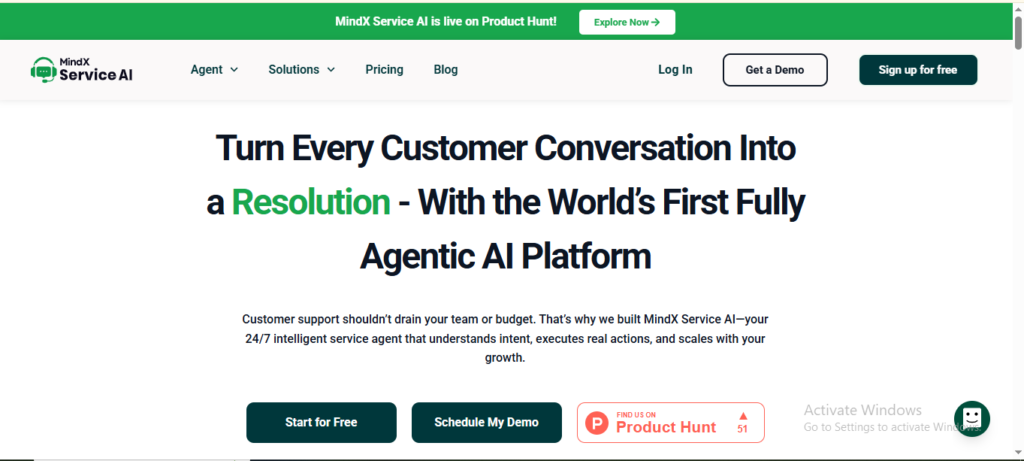
Overview: MindX Service AI is a next-gen ticket resolution platform that automates customer support with AI-driven workflows, multilingual automation, and real-time analytics. Launched in 2025, it integrates seamlessly with existing CRMs to identify, categorize, and resolve repetitive queries. Its standout feature is AI with human-like empathy detecting customer frustrations through advanced NLP and responding with personalized care.
Key Features:
AI-Powered Ticket Resolution: Automates up to 80% of repetitive tickets via intent recognition and scripted responses for queries like password resets or order tracking.
Nexa AI Copilot: Suggests contextual replies, summarizes threads, and predicts escalations using sentiment analysis cutting complex case handling time by 50%.
Omnichannel & Multilingual Automation: Works across chat, WhatsApp, email, social media, and voice; supports 15+ languages including Hindi, Tamil, and Bengali.
Smart Routing + Analytics: Auto-assigns tickets using ML based on expertise and workload; real-time dashboard tracks trends, performance, and ROI.
Self-Learning Engine: Continuously improves by analyzing past resolutions, incorporating feedback loops to refine accuracy over time, achieving 95%+ intent detection within months.
Impact: MindX delivers 70% faster ticket resolutions, turning hours-long backlogs into minutes. It reduces escalations by 50% through proactive AI suggestions and boosts CSAT by 40% with personalized care.
Pros: Affordable, multilingual, deploys in under a week ideal for scaling global SMBs and startups..
Cons: Third-party integrations still expanding; may lack support for niche legacy systems
Pricing: $49/month (annual billing) includes 500 conversations and unlimited users. Add-ons: $39 per additional 500 conversations, with enterprise tiers for unlimited volume.
Best For: Businesses seeking an intelligent, multilingual, affordable ticket automation system to replace manual resolution workflows, especially in global SMBs or high-growth startups.
2. Aisera Ticket AI
Overview: Ais
era Ticket AI is an enterprise-grade powerhouse that automates the end-to-end ticketing process with conversational AI and deep integration into ITSM tools. In 2025, it’s evolved with “Agentic AI,” enabling autonomous agents to handle multi-step workflows like procurement approvals or compliance checks alongside ticket resolution. Trusted by Fortune 500 companies, it excels in high-stakes environments where accuracy and security are paramount.
Key Features:
Intent Detection & Auto-Routing: Uses generative AI to parse queries with 98% accuracy, routing tickets across IT, HR, and customer service silos.
Multi-Channel Ticket Resolution: Supports email, chat, voice, and API integrations, with seamless handoffs between self-service bots and live agents.
Pre-Trained AI for IT & Support: Includes domain-specific models for tech troubleshooting, reducing mean time to resolution (MTTR) by 65%.
Predictive Analytics: Forecasts ticket spikes based on historical data and external factors like product launches, allowing proactive resource allocation.
Enterprise Security: SOC 2 compliant with role-based access and audit trails for regulated industries.
Impact: Aisera users report 75% deflection rates for routine tickets and 35% cost savings on support staffing. In a recent Gartner case study, a telecom giant automated 90% of billing inquiries, improving NPS by 28 points.
Pros: High enterprise-grade accuracy, scalable for 100,000+ tickets/month, and strong ROI through workflow orchestration.
Cons: Costly setup for smaller teams, with a steeper learning curve for non-technical admins.
Best For: Large organizations needing comprehensive automation across departments.
3. Moveworks
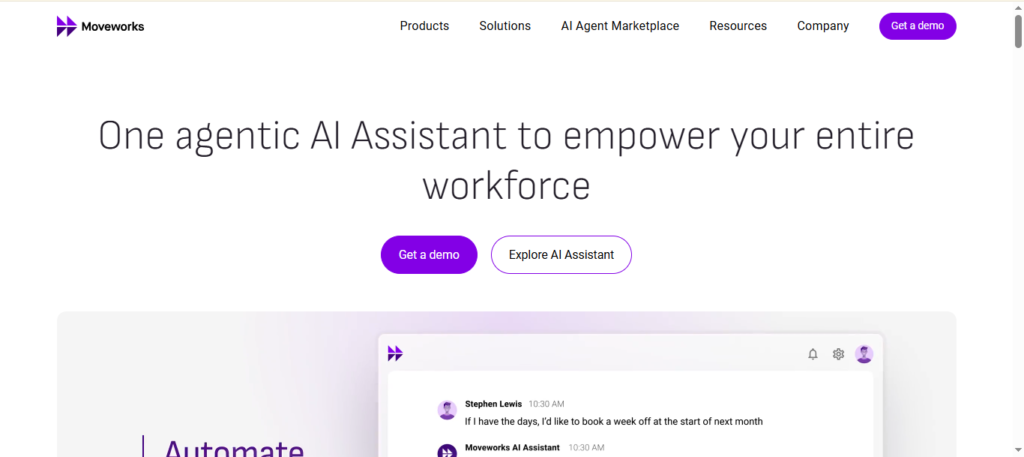
Overview: Moveworks is an AI platform specializing in autonomous IT ticket resolution, helping large organizations deflect tickets instantly through natural, Slack-integrated conversations. By 2025, its agentic AI has expanded beyond IT to HR and facilities, creating a unified “conversational service desk” that feels like chatting with a colleague.
Key Features:
Conversational AI over Slack/MS Teams: Employees query in plain English, with the bot resolving issues like software installs or policy lookups without ticket creation.
Automated Ticket Classification & Response: Integrates with ServiceNow and Jira for backend automation, auto-filling forms and escalating only when needed.
Real-Time Analytics: Tracks deflection rates, query patterns, and ROI, with AI-driven recommendations for knowledge base improvements.
Multi-Tenant Support: Handles global teams with context-aware responses, including compliance checks for sensitive data.
Impact: Deployments show 80% self-service adoption and 50% reductions in IT tickets. A financial services client deflected 2,000+ monthly requests, saving $1.2M annually.
Pros: Great for IT support automation, intuitive for end-users, and excels in employee-facing scenarios.
Cons: Primarily enterprise-focused, with limited customer-facing omnichannel depth.
Best For: IT-heavy enterprises seeking Slack-native, hands-off resolution.
4. SysAid (AI ITSM)
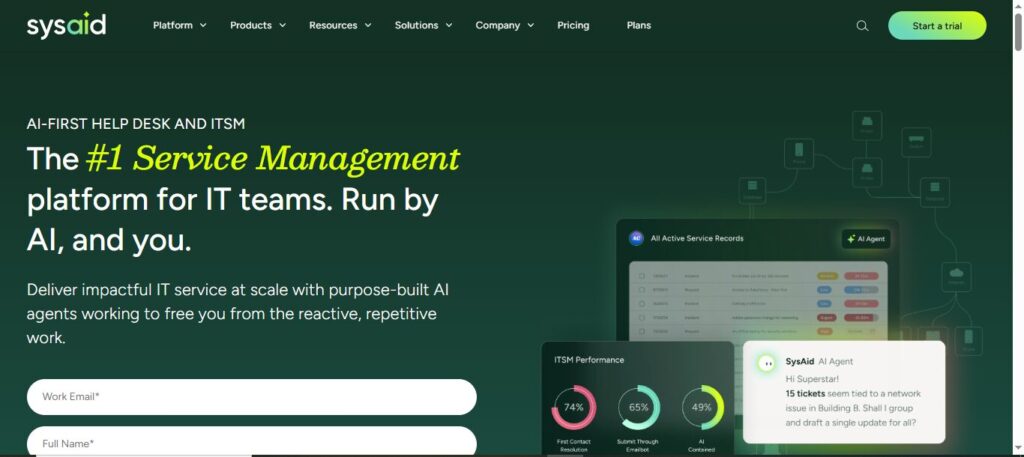
Overview: SysAid leverages generative AI for IT ticketing automation, enabling faster internal issue resolution with a focus on self-service portals and asset management. Updated in 2025 with SysAid Copilot, it now processes images and attachments for visual diagnostics, like error screenshots.
Key Features:
Image-Aware AI: Analyzes uploads to diagnose hardware faults or phishing attempts.
Built-in AI Workflows: Automates prioritization, SLAs, and notifications, integrating with Active Directory for user context.
Self-Service Portals: Empowers employees to resolve 40% of issues independently via searchable FAQs and chatbots.
ITIL-Aligned Reporting: Custom dashboards for compliance and performance tracking.
Impact: Users achieve 60% faster MTTR and 30% fewer repeat tickets. IT teams in manufacturing report 45% agent productivity gains.
Pros: Built-in AI workflows and strong for internal IT support.
Cons: Less versatile for external customer service.
Best For: Mid-sized IT help desks needing compliant, asset-integrated automation.
5. Freshservice (Freshworks)
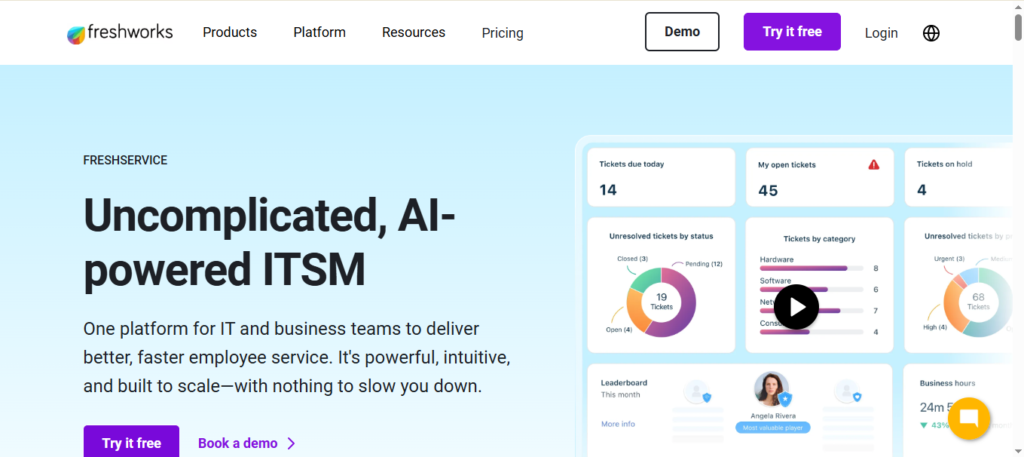
Overview: Freshworks’ AI engine, Freddy AI, automates ticket routing, prioritization, and self-service responses in a unified ITSM and customer support platform. In 2025, enhancements include predictive ticketing, where AI anticipates issues from user behavior data.
Key Features:
Freddy AI Insights: Detects anomalies in ticket volumes and suggests preventive actions. 100+ Integrations: Plugs into Jira, Slack, and Salesforce for end-to-end workflows.
Mobile-First Omnichannel: Handles field support with offline capabilities.
KPI Dashboards: Measures FCR, CSAT, and SLA adherence out-of-the-box.
Impact: 45% reduction in resolution times and 25% CSAT uplift. E-commerce users automate 70% of catalog queries.
Pros: Unified ITSM + customer support and user-friendly scaling.
Cons: Pricing rises with team size, adding up for large deployments.
Best For: Growing businesses blending IT and customer support.
6. Zoho Desk (Zia AI)
Overview: Zia, Zoho’s AI assistant, helps automate ticket tagging, prioritization, and sentiment detection within an affordable, ecosystem-integrated platform. 2025 updates add voice-to-ticket transcription for call centers.
Key Features:
Sentiment Analysis: Flags urgent or negative tickets for immediate triage.
Zoho Suite Sync: Seamless with CRM and analytics tools for 360-degree views.
Multichannel Intake: Email, social, and telephony unified.
Trend Forecasting: Predicts seasonal spikes from historical data.
Impact: SMBs see 50% faster handling and 20% fewer escalations. A retail chain automated returns processing, cutting errors by 35%.
Pros: Affordable for SMBs with deep Zoho ties.
Cons: Limited for large-scale, hyper-complex automation.
Best For: Cost-conscious teams in the Zoho ecosystem.
7. Help Scout
Overview: Help Scout is an agent-first AI support tool that drafts replies, summarizes conversations, and manages shared inboxes efficiently, emphasizing a “human-friendly” approach over full autonomy.
Key Features:
AI Drafting: Generates tone-matched responses in seconds.
Conversation Summaries: Condenses threads for quick handoffs.
Shared Inbox AI: Auto-assigns based on expertise and load.
Beacon Analytics: Tracks engagement beyond tickets.
Impact: Agents save 40% time on drafting, boosting throughput by 30%. Support teams report higher job satisfaction.
Pros: Intuitive, human-centric interface.
Cons: Not optimized for fully autonomous resolution.
Best For: Teams prioritizing agent empowerment over deflection.
8. Jira Service Management
Overview: Popular among DevOps and IT teams, Jira Service Management now features Atlassian Intelligence for AI-driven incident triage, task prioritization, and virtual agents in 2025.
Key Features:
Atlassian Intelligence: Summarizes issues and suggests fixes from Confluence knowledge. DevOps Integrations: Links tickets to code deploys and monitoring tools.
Portal Customization: Branded self-service for internal/external users.
Advanced SLAs: Automates breach alerts and root-cause analysis.
Impact: 55% faster incident response in agile environments. Tech firms reduce downtime by 40%.
Pros: Deep Atlassian stack integration.
Cons: Requires technical setup and expertise.
Best For: IT + DevOps workflows in software-heavy orgs.
9. Rezolve.ai
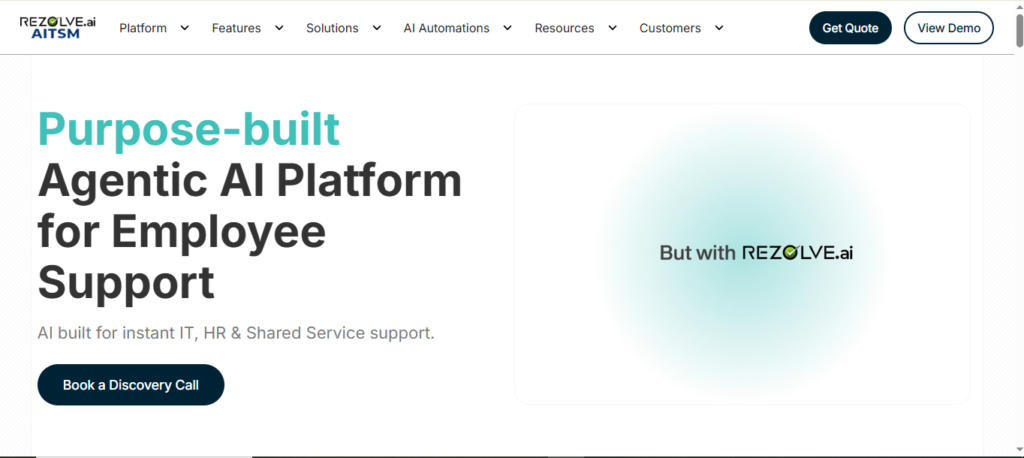
Overview: Rezolve.ai delivers conversational AI for IT and HR service desks, automating ticket creation, response, and resolution inside Teams with generative AI for multi-step guidance.
Key Features:
Interactive Guidance: Step-by-step troubleshooting via chat.
Teams-Native Automation: Creates/resolves tickets without leaving the app.
Generative Resolution: Builds custom scripts for unique issues.
ROI Tracking: Measures deflection and agent efficiency.
Impact: 70% self-resolution in HR/IT queries. Enterprises save 25% on desk costs.
Pros: Strong conversational interface for internal use.
Cons: Mainly focused on employee support, less for customers.
Best For: Microsoft-centric teams needing chat-based automation.
10. monday Service (AI Automation)
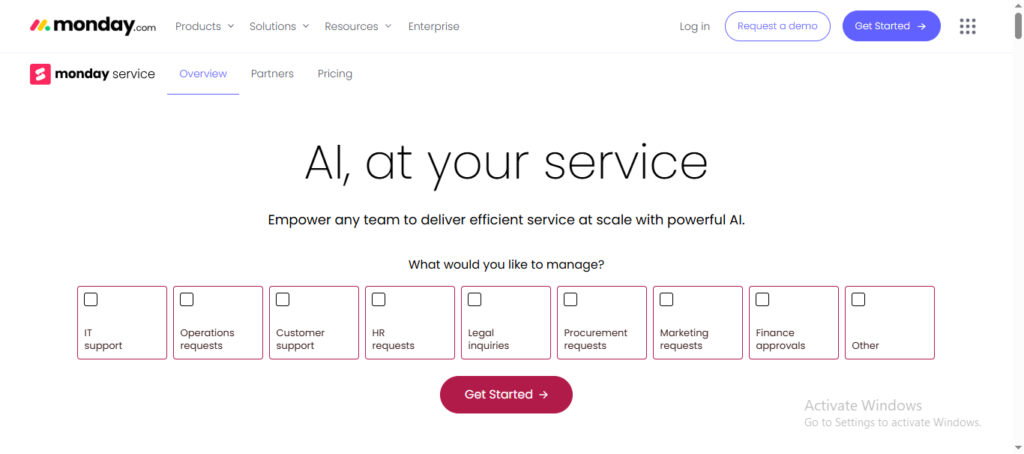
Overview: Part of monday.com’s work OS, this solution automates ticket assignment, routing, and responses using custom rules, AI triggers, and n o -code boards for visual workflow management.
Key Features: No-Code Customization: Drag-and-drop AI rules for unique processes.
App Marketplace: Integrates with 200+ tools like Zapier.
Visual Dashboards: Real-time ticket flow and bottleneck alerts.
Trigger-Based AI: Automates based on events like new emails.
Impact: 40% workflow efficiency gains. Project teams handle 2x tickets without added headcount.
Pros: Flexible, no-code setup.
Cons: Lacks deep native AI assistant for complex NLP.
Best For: Configurable, visual automation in collaborative environments.
Decision-Making Framework
Choosing the best AI solution for ticket resolution automation boils down to your unique needs. Use this framework to narrow options:
| Factor | Key Question | Top Picks |
|---|---|---|
| Ticket Volume | Do you manage 500 or 50,000 tickets a month? | Low: Zoho Desk; High: Aisera or Moveworks |
| Support Channels | Web, chat, WhatsApp, or internal IT? | Omnichannel: MindX Service AI; Internal: Rezolve.ai |
| AI Need | Full automation or AI-assist? | Autonomous: Moveworks; Assist: Help Scout |
| Integration Needs | CRM, Slack, or Teams? | Atlassian: Jira; Microsoft: Rezolve.ai |
| Budget | Fixed monthly vs per-seat model? | Fixed: MindX Service AI; Per-Seat: Freshservice |
| Language Support | Global or regional? | Multilingual: MindX Service AI; English-Focused: SysAid |
Assess your answers, then pilot 2-3 platforms for a week to test fit.
Summary
| Best Use Case | Recommended Platform |
|---|---|
| Overall Best for AI Ticket Resolution | MindX Service AI |
| Enterprise Automation Suite | Aisera |
| Autonomous IT Resolution | Moveworks |
| Generative ITSM | SysAid |
| Omnichannel Helpdesk | Freshservice |
| Budget SMB Automation | Zoho Desk |
| Human-Friendly AI Assist | Help Scout |
| DevOps Workflow Automation | Jira Service Management |
| Conversational Service Desk | Rezolve.ai |
| Configurable Workflow Tool | monday Service |
FAQs
It’s the use of AI to automatically analyze, categorize, and resolve repetitive customer support issues, improving speed and reducing manual work. Platforms like MindX Service AI handle everything from intake to closure.
It’s an affordable, multilingual, and scalable AI platform with built-in automation, analytics, and Nexa AI Copilot for human agents, automating 80% of tickets at a fraction of enterprise costs.
Moveworks or SysAid are ideal for ITSM automation, with strong self-service and integration for internal tech support.
MindX Service AI and Zoho Desk offer powerful automation at the best value, with quick setup and low overhead.
MindX Service AI leads with support for 15+ Indian languages, followed by Zoho Desk for broader South Asian coverage.
Final Thoughts
Ticket resolution automation is redefining customer service, cutting response times, improving accuracy, and freeing teams to focus on high-value work. While global players like Aisera and Moveworks dominate enterprise automation, MindX Service AI leads the next generation of intelligent support platforms, combining AI ticket automation, multilingual capability, and human-like empathy at an unmatched price.
In 2025, the platforms that win are those blending cutting-edge AI with practical scalability, ensuring every interaction builds trust. Don’t let manual processes hold you back, join the shift to smarter support.
Automate your ticket resolution today with MindX Service AI and join the global mission to #EndPoorService
